Not sure which laser fits your production? We get it. Our engineers have helped thousands of manufacturers choose, install, and optimize fiber laser cutters and welding systems. Tell us what you're cutting or welding, and we'll guide you to the right machine.
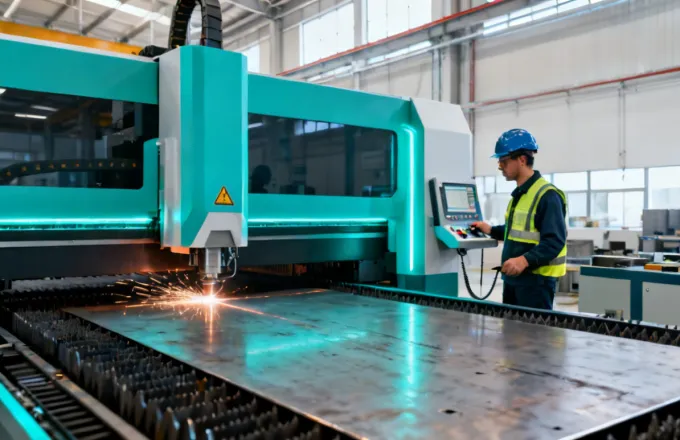
Whether you're processing thin sheet metal or welding heavy assemblies, we have a system that matches your throughput, tolerance, and budget.
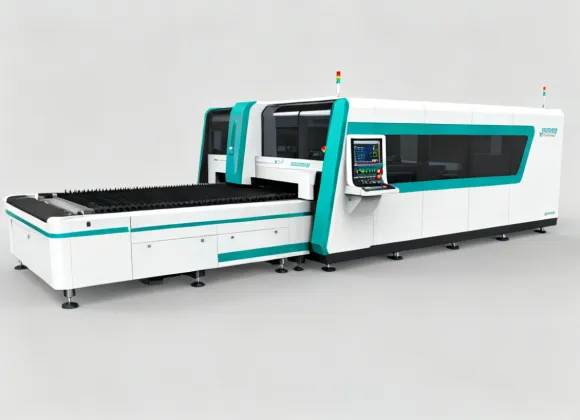
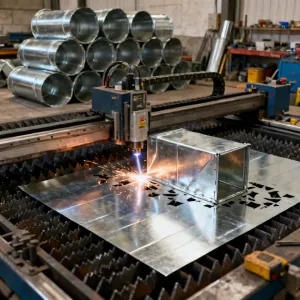
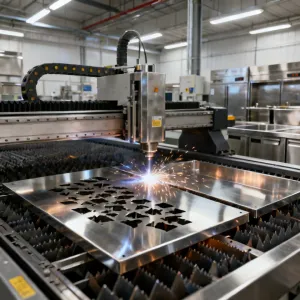
Our workhorse for sheet metal fabrication. Available from 1.5 kW to 40 kW with IPG or Raycus laser sources. Handles carbon steel up to 30mm, stainless up to 25mm, and aluminum up to 20mm. Enclosed cabin with Class 1 laser safety rating and integrated fume extraction.
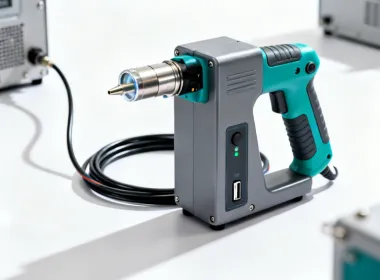
Portable welding with fiber precision. 1 - 3 kW power range, wobble welding head, and a learning curve measured in hours, not weeks.
Learn More →
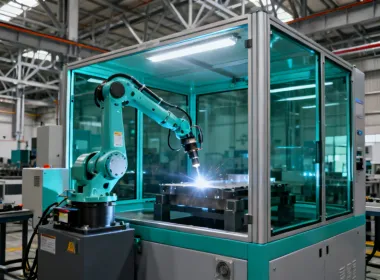
Automated welding for high-volume production. 6-axis robot integration with seam tracking and consistent weld quality across thousands of cycles.
Learn More →
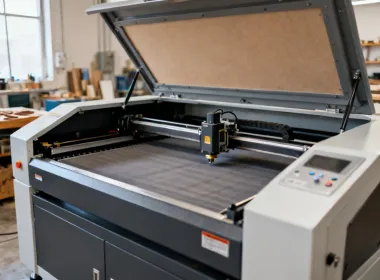
For non-metal processing needs. Cut and engrave acrylic, wood, leather, fabric, and more with clean edges and fine detail.
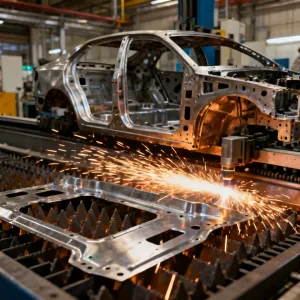
Learn More →Our equipment runs in production lines from automotive plants to small job shops. Here are some of the industries where our customers put our machines to work every day.
Our fiber laser cutting systems maintain positioning accuracy down to +-0.03mm, backed by advanced Panasonic servo control and precision HIWIN linear guides. When your tolerances leave no room for error, that repeatability becomes your competitive edge.
Our support team averages a 4-hour first-response time for remote diagnostics. Every machine ships with free installation by our field engineers, operator training at your facility, and a 2-year comprehensive warranty.
Fiber laser technology delivers up to 60% energy savings compared to CO2 systems. With photoelectric conversion efficiency above 30% and zero laser gas consumption, our machines cut your electricity and consumable bills while maintaining the same throughput.
It depends on the material and thickness you process most often. For example, a 3 kW fiber laser cuts up to about 14mm carbon steel, while a 12 kW system handles 30mm or more. Our engineers run a free material analysis and recommend the power level that balances your throughput requirements against your budget. Over-specifying power wastes money; under-specifying creates bottlenecks.
Fiber lasers are 2-3x faster on metals under 6mm and consume roughly 60% less electricity than CO2 systems. However, CO2 lasers still outperform on thick non-metals like acrylic and wood. If you process primarily metals, fiber is the better investment. If you run mixed materials including organics, CO2 or a hybrid approach may make more sense. We can help you evaluate which fits your product mix.
Basic operation — loading material, starting pre-programmed jobs, and routine maintenance — typically takes 2-3 days of hands-on training. Advanced programming and parameter optimization for new materials may take 1-2 weeks. Our trainers stay at your site until your team is comfortable running production independently.
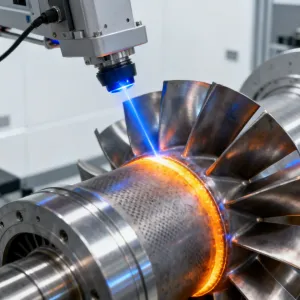
In many cases, yes — particularly for thin-to-medium gauge stainless steel and carbon steel joints where heat distortion matters. Laser welding produces a smaller heat-affected zone (typically 0.2-0.5mm) versus 2-4mm for TIG. However, laser welding has limitations on thick sections and gap tolerance. We recommend sending sample parts for test welding before committing — this service is free.
Our first step is remote diagnostics — about 60% of issues are resolved remotely within 4 hours. For hardware failures, our regional service engineers can typically reach your facility within 48 hours domestically. We stock 97% of common spare parts and can ship them within 24 hours. The 2-year warranty covers all manufacturing defects in components and labor.
Yes. Our fiber lasers struggle with highly reflective copper and brass above 3mm thickness without specialized nozzles. Our standard machines are not rated for explosive or corrosive environments. Lead times for custom configurations run 6-8 weeks versus 2-3 weeks for stock models. We believe in transparency about what our equipment can and cannot do — it prevents costly mismatches.
Send us your material specs, target throughput, and budget range. Our applications engineer will put together a customized recommendation within 2 business days — no commitment, no pressure.